
Stainless steel cable ties are widely used in industrial environments where strength, durability, and resistance to demanding operating conditions are essential. From oil and gas facilities to power plants and manufacturing industries, selecting the right stainless steel cable tie helps ensure secure bundling and long-term performance.
However, not all stainless steel cable ties are suitable for every application. Material grade, operating environment, tensile strength, dimensions, and locking mechanism should all be considered before making a selection.
In this guide, we explain the key factors to consider when choosing the right stainless steel cable tie for your application.
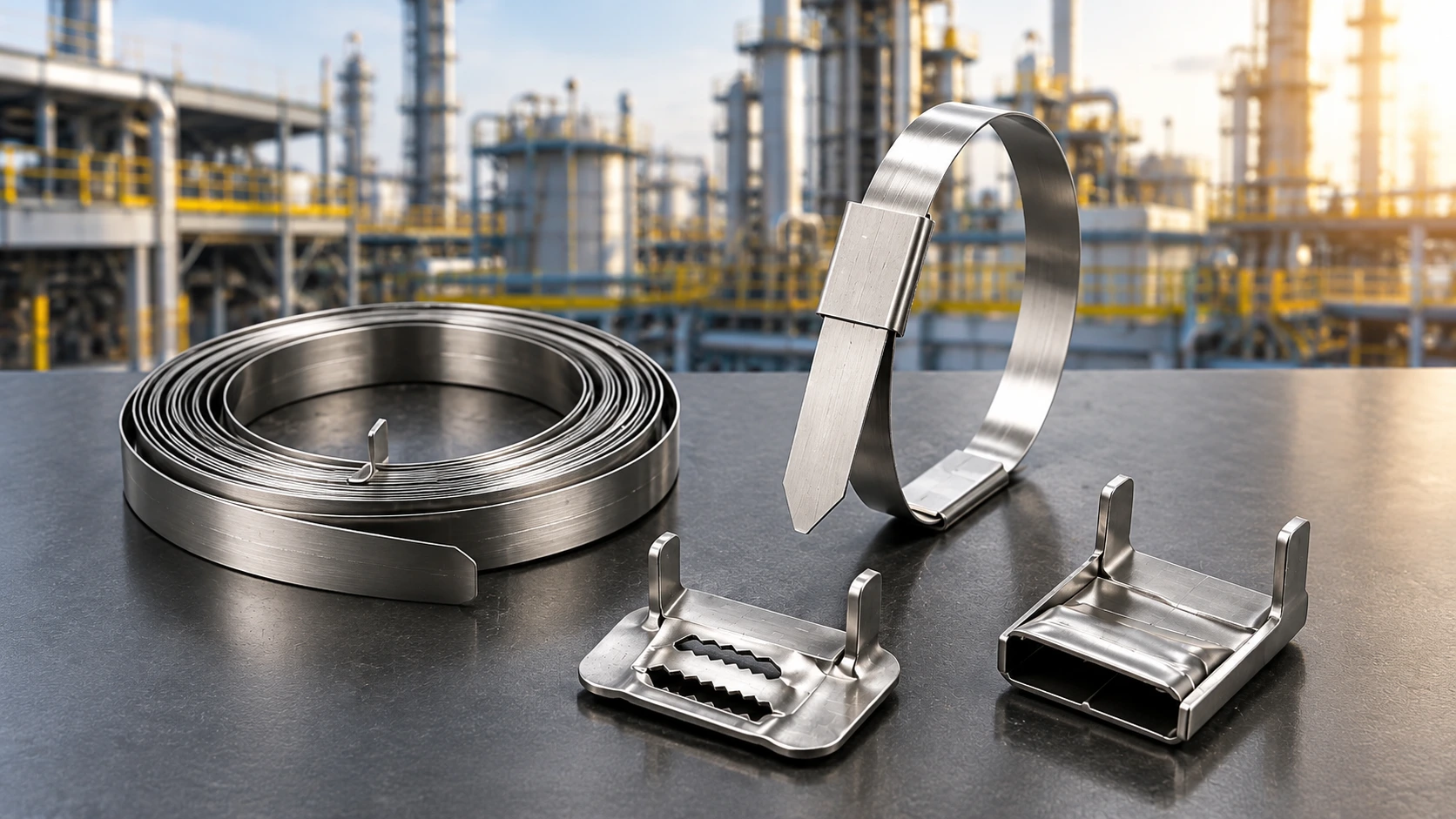
1. Select the Right Stainless Steel Grade
The stainless steel grade is one of the most important factors when selecting a cable tie. It determines the tie's resistance to corrosion and suitability for different environments.
Type 304 Stainless Steel
Type 304 stainless steel cable ties are suitable for many general industrial applications where good corrosion resistance is required. They are commonly considered for indoor installations, equipment bundling, and general-purpose fastening.
Type 316 Stainless Steel
Type 316 stainless steel cable ties offer enhanced corrosion resistance, particularly in environments exposed to chlorides and salt. They are often preferred for marine, offshore, coastal, and certain chemical-processing applications.
The appropriate grade depends on the actual exposure conditions, including chemicals, temperature, moisture, and cleaning agents.
2. Consider the Operating Environment
Before choosing a stainless steel cable tie, evaluate where it will be installed.
Oil and Gas: Consider corrosion resistance, mechanical strength, and compatibility with the installation environment.
Petrochemical Plants: Evaluate exposure to chemicals, heat, and corrosive substances.
Marine and Offshore: Type 316 stainless steel may be appropriate where exposure to saltwater or chloride-containing environments is a concern.
Power and Electrical Installations: Consider cable bundle size, installation conditions, and any applicable electrical or project specifications.
Construction and Infrastructure: Select ties according to outdoor exposure, weather conditions, and the components being secured.
Manufacturing Facilities: Assess exposure to machinery vibration, chemicals, heat, and maintenance requirements.
Always verify the cable tie's specifications against the conditions of the intended application.
3. Choose the Correct Length and Width
Stainless steel cable ties are available in different lengths and widths to accommodate various bundle sizes and fastening requirements.
When selecting the dimensions, consider:
The diameter and shape of the cable bundle or component
The required wrapping length
The available installation clearance
The tie width and its compatibility with the fastening requirements
The specified tensile or loop strength
A tie that is too short may not fit securely around the bundle, while an unsuitable width or strength rating may compromise the installation. Follow the manufacturer's sizing and installation recommendations.
4. Check Tensile Strength and Load Requirements
Tensile strength indicates the force a cable tie can withstand under specified test conditions. Choosing the correct strength rating is essential for maintaining secure fastening.
Consider the weight of the bundled components, vibration, movement, and any additional loads that may act on the tie.
Do not select a cable tie based on appearance alone. Check the manufacturer's rated strength and ensure that the product is appropriate for the intended application.
Stainless steel cable ties should not be used as lifting devices or as substitutes for purpose-designed structural fasteners.
5. Understand the Locking Mechanism
The locking mechanism affects how a cable tie is installed and secured.
Depending on the product design, stainless steel cable ties may use ball-locking, ladder-style, or other locking mechanisms. Each design has specific installation requirements and performance characteristics.
When choosing a locking mechanism, consider installation speed, the tools required, the accessibility of the installation area, and the manufacturer's instructions.
Using the recommended installation tool helps achieve consistent fastening and reduces the risk of improper installation.
6. Consider Coated or Uncoated Cable Ties
Stainless steel cable ties may be available with or without a protective coating.
Uncoated Stainless Steel Cable Ties: These are suitable for applications where the stainless steel surface is appropriate for the installation and the manufacturer's specifications meet the project requirements.
Coated Stainless Steel Cable Ties: Coatings may provide additional surface protection, help reduce abrasion against bundled components, or improve handling, depending on the coating type.
For coated ties, verify the coating material, temperature limits, chemical compatibility, and suitability for the installation environment. A coating does not automatically make a tie suitable for every corrosive environment.
7. Check Temperature and Application Requirements
Industrial installations may experience high or low temperatures, direct sunlight, moisture, or exposure to chemicals.
Before purchasing stainless steel cable ties, check the manufacturer's specified operating temperature range and confirm that the material and any coating are suitable for the intended conditions.
For electrical and industrial projects, also review applicable project specifications, safety requirements, and relevant standards.
8. Choose a Reliable Supplier
Selecting the right supplier is just as important as selecting the right product. A reliable industrial supplier can help you identify suitable specifications and obtain the correct cable tie for your project.
Before placing an order, confirm:
Stainless steel grade and material specifications
Available lengths, widths, and locking designs
Tensile strength and temperature ratings
Coating options, where required
Product datasheets and applicable certifications
Availability and delivery requirements
Providing these details helps ensure that the selected product meets the technical and operational needs of your application.
Stainless Steel Cable Ties is supplied by Arabian Arrow in Saudi Arabia
Arabian Arrow Supply & Services Co. Ltd. supplies industrial fastening and identification solutions to customers across Saudi Arabia. Our product range includes BAND-IT stainless steel cable ties and other industrial fastening products for a variety of application requirements.
Whether your project involves oil and gas facilities, petrochemical plants, power and utilities, construction, or manufacturing, selecting the appropriate stainless steel cable tie starts with understanding your operating environment and technical specifications.
Need help selecting the right stainless steel cable tie?
Contact Arabian Arrow for product information, specifications, and quotations.
Email: info@arabianarrow.com.sa
Website: www.arabianarrow.com.sa
Type 304 is suitable for many general industrial applications, while Type 316 is often preferred for environments involving saltwater or chloride exposure. The correct grade depends on the actual service conditions.
Yes, stainless steel cable ties can be suitable for outdoor applications. The appropriate grade and any coating should be selected according to weather exposure, corrosion risks, and the manufacturer's specifications.
They can be used for suitable cable bundling and fastening applications in oil and gas facilities, provided that the selected product meets the project's technical, environmental, and safety requirements.
Uncoated ties have an exposed stainless steel surface, while coated ties have an additional protective layer that may help reduce abrasion or provide other application-specific benefits. Suitability depends on the coating and installation conditions.
Arabian Arrow Supply & Services Co. Ltd. supplies BAND-IT stainless steel cable ties in Saudi Arabia. Contact info@arabianarrow.com.sa for product details and quotations.
Frequently asked questions
Here are some common questions about our company.